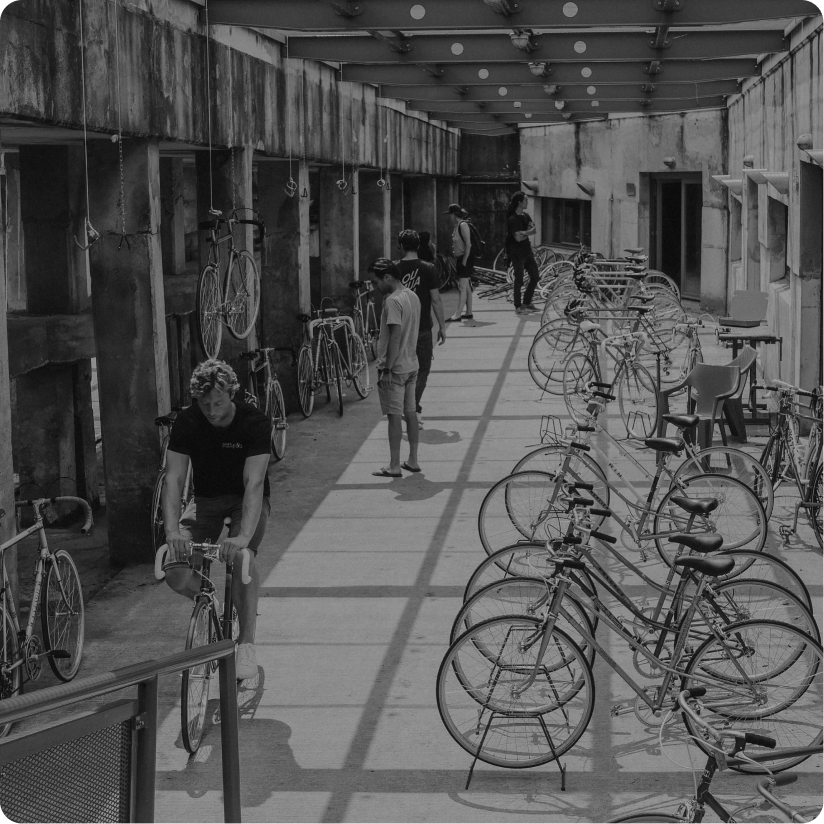


In a constantly changing urban world, active mobility is becoming a major strategic issue. The bike fleet manager role is emerging as an innovative and sustainable answer to today's transport challenges. This profession, at the crossroads of technology, logistics and the environment, embodies the transformation of urban transport systems. A key player in the mobility of the future, the bike fleet manager coordinates and optimises bike-sharing systems, ensuring they are efficient, accessible and operationally sound.
Combining technical management, team coordination and strategic vision, this role offers exciting prospects for professionals who want to make a concrete contribution to urban and environmental change. It is much more than a technical job: it is a career with a real future, rooted in sustainable development and local innovation.

Job description
The bike fleet manager is a key professional in developing and running sustainable, active urban mobility systems. Their main role is to coordinate and optimise all operations related to bike fleets, whether bike-sharing schemes or fleets for businesses and local authorities. At a time when urban mobility is undergoing deep change, this role combines technical, logistical and environmental skills.
These professionals mainly work for local authorities, transport companies, mobility start-ups and urban service operators. They oversee the entire life cycle of the bikes, from purchase to maintenance, including how they are distributed and kept available across the area. Their main mission is to ensure an efficient, safe and high-performing mobility service.
Skills required
A bike fleet manager needs a range of technical and soft skills. On the technical side, in-depth knowledge of bike mechanics is essential, as is a good command of fleet management software and geolocation systems. IT and data analysis skills are also key to optimising operational performance.
Soft skills play a crucial role. Excellent communication, a strong sense of organisation and great adaptability are sought after. A bike fleet manager must be able to coordinate teams, manage service providers and work with a variety of stakeholders (technicians, elected officials, users).
Training and qualifications
There are several training routes into this job. In France, the most suitable courses are usually two- to three-year post-secondary qualifications in transport, logistics or mobility management. These include the BTS Maintenance des Véhicules (a two-year vocational diploma in vehicle maintenance), professional bachelor's degrees in Urban Systems and Transport, or specialised diplomas in Sustainable Mobility Management.
Additional training in project management, geographic information systems and sustainable development is particularly valued. A good command of English can also be a real asset, especially for companies working on international projects.
Career development
A bike fleet manager has many and varied career prospects. After a few years of experience, they can move into roles with greater responsibility, such as urban mobility manager, transport operations director or sustainable mobility strategy consultant.
Some professionals choose to specialise in related fields such as mobility consulting, designing bike-sharing systems or developing innovative technology solutions for urban transport. Starting a business is also an interesting path in this fast-growing sector.
Salary and job prospects
A bike fleet manager's salary varies with experience and the type of employer. In France, starting salaries are generally between €25,000 and €35,000 a year. With experience, this can reach €45,000 to €55,000 for more senior roles.
Job prospects are very promising, driven by sustainable development policies and the transformation of urban mobility. Major French cities such as Paris, Lyon and Marseille are actively recruiting in this field. Local authorities, transport companies and mobility start-ups offer many job opportunities.