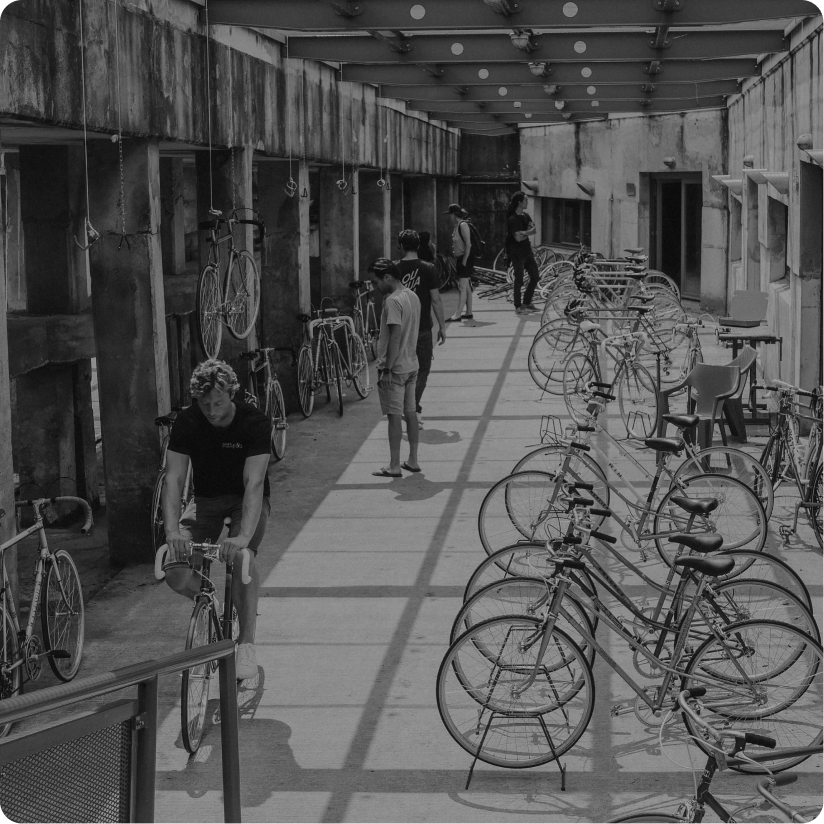


As the world goes through an ecological transition and the way people travel changes, the role of cycling mobility facilitator is emerging as an innovative and promising answer to sustainable mobility challenges. This exciting profession sits at the crossroads of the environment, urban planning and education, offering a unique opportunity to make a concrete contribution to changing travel habits. The cycling mobility facilitator plays a key role, working every day to promote urban cycling, raise awareness of alternative transport and support local areas in their soft mobility strategy.
Both an educator and an expert in active mobility, this professional combines technical, interpersonal and strategic skills to encourage more environmentally friendly travel. The role is part of a strong social and ecological movement, responding to today's challenges of energy transition and reducing greenhouse gas emissions.

Job description
The cycling mobility facilitator is a key professional in developing and promoting sustainable modes of transport, in particular urban cycling. The job is emerging in the context of the ecological transition and changing mobility in France. Their main role is to raise awareness, train and support people in using the bike as an everyday means of transport.
In practice, the facilitator works with a range of audiences: local authorities, companies, schools, associations and the general public. They design and run initiatives to promote cycling, organise back-in-the-saddle workshops, cycling skills training and awareness events about soft mobility. They can also advise local authorities on cycling infrastructure and help develop strategies for alternative mobility.
Skills required
The job of cycling mobility facilitator requires a mix of technical and interpersonal skills. On the technical side, excellent cycling skills are essential, along with in-depth knowledge of bike mechanics, road safety and urban planning. Expertise in the environment, sustainable development and mobility policy is also sought after.
In terms of soft skills, the facilitator needs excellent teaching and communication abilities. They must be able to adapt their message and approach to different audiences and lead groups with energy and a good teaching approach. Facilitation, project management and advisory skills are essential. Digital skills and strong writing are additional assets.
Training and qualifications
Becoming a cycling mobility facilitator usually involves specialised training. The most relevant qualifications are two to three years of higher education (Bac+2 to Bac+3 in France) in the environment, sustainable development, community development or social sciences. Specific courses such as the French professional bachelor's degrees in "social, socio-educational and socio-cultural facilitation" or French state diplomas in youth and community work are particularly recommended.
Several organisations offer specialised training, including national cycling advocacy associations such as the FUB (Fédération des Usagers de la Bicyclette, the French cyclists' federation). Additional certifications in bike mechanics, road safety or mobility project management are valuable assets to stand out on the job market.
Career development
A cycling mobility facilitator has many career options. After a few years of experience, they can move into roles with more responsibility, such as sustainable mobility officer, cycling project coordinator or urban mobility strategy adviser. Some choose to set up their own consultancy or facilitation business, while others join local authorities, associations or specialist consultancies.
Salary and job prospects
A cycling mobility facilitator's salary varies with experience and type of employer. At the start of their career, pay is generally between €1,600 and €2,200 gross per month. With experience, it can reach €2,500 to €3,000. Job prospects are currently very good, driven by public policies to develop sustainable mobility and the growing will of local areas to promote cycling.
The sector is very dynamic, boosted in particular by national and local cycling plans, urban development and growing environmental awareness. Job opportunities are multiplying in local authorities, associations, consultancies and start-ups specialising in sustainable mobility.